
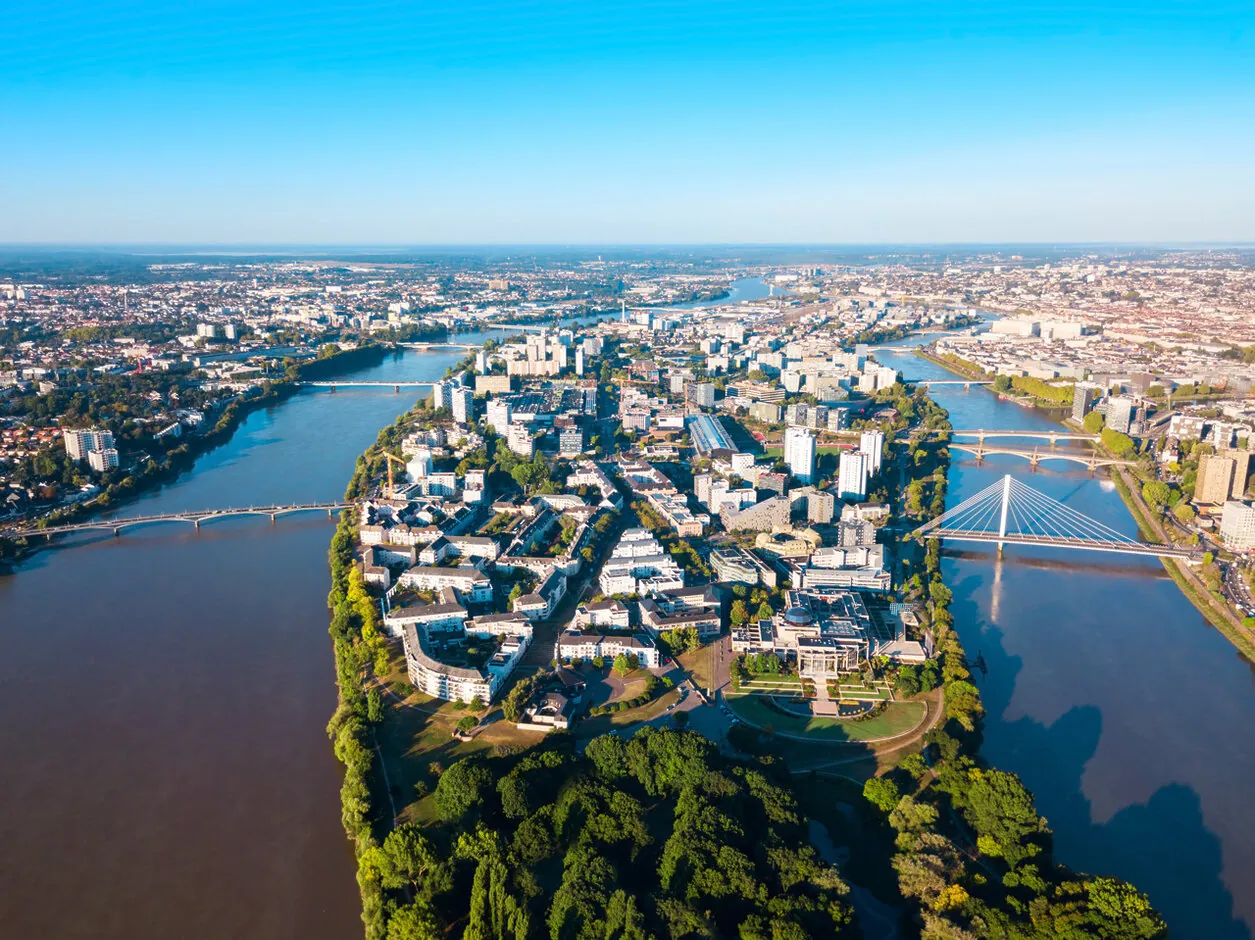
Would you like to learn French in France, but are unsure whether to choose Paris, Lyon, Bordeaux or Nantes? Your choice of destination influences your budget, your daily life and your opportunities to practise the language outside class.
Paris appeals with its cultural offerings and international atmosphere. Lyon combines urban life, heritage and gastronomy. Bordeaux attracts visitors with its architecture and proximity to the ocean. Nantes offers a balance between student life, cultural activities and access to nature.
There is no ideal city for every learner. Your choice depends on your budget, your level of French, the length of your stay and your interests.
This comparison helps you choose based on six criteria: cost of living, accommodation, transport, language immersion, international environment and activities.
Which city should you choose based on your profile?
- Paris: choose this destination if you are looking for exceptional cultural offerings and great international diversity.
- Lyon: favour this city if you enjoy gastronomy, heritage and dynamic urban life.
- Bordeaux: choose it if you enjoy architecture, walks and trips to the Atlantic coast.
- Nantes: favour it if you are looking for a student and cultural environment, with green spaces and opportunities to explore western France and its entire coastline.
These pointers are not a ranking. In all four cities, you can find French courses for foreign learners and opportunities to meet French speakers. The key is to choose an environment where you will want to go out, interact and speak French regularly.
The six criteria to compare before choosing your city
1. Monthly budget
Accommodation generally accounts for a significant share of the budget for a language-learning stay. You also need to budget for meals, transport, leisure activities and any settling-in costs.
According to student cost-of-living estimates published in 2026, the average monthly budget is approximately 1 618 € in Paris, 1 331 € in Lyon and 1 321 € in Bordeaux. For Nantes, some estimates put this budget between 1 130 and 1 220 €.
These amounts are guidelines for student living costs, not the cost of a complete language-learning stay. They do not necessarily include course fees and vary depending on accommodation and individual habits.
Before booking, draw up your own budget and allow a margin for unexpected expenses.
2. Accommodation prices and availability
The type of accommodation you choose can significantly change the cost of your stay. A room in shared accommodation or a homestay may be more economical than a self-contained studio.
The Studapart barometer for the first half of 2026 gives the following average rents for a studio: approximately 1 039 € in Paris, 676 € in Lyon, 612 € in Bordeaux and 510 € in Nantes. For a room in shared accommodation, the recorded averages are approximately 823 €, 485 €, 549 € and 441 €, respectively.
| Type of accommodation | Paris | Lyon | Bordeaux | Nantes |
|---|---|---|---|---|
| Studio | 1 039 € | 676 € | 612 € | 510 € |
| Room in shared accommodation | 823 € | 485 € | 549 € | 441 € |
These are observed averages, not guaranteed prices. Rents depend on the neighbourhood, service charges and time of year.
Start your search well in advance. Also compare journey times to your school: cheaper accommodation that is very far away can lead to additional costs and constraints.
3. Opportunities to speak French every day
Immersion is not limited to the hours spent in class. You also make progress when shopping, ordering a meal, asking for information or chatting with your neighbours.
In all four cities, markets, associations, libraries, sports clubs and cultural activities offer opportunities to practise French.
To make the most of your stay, choose a regular course and plan activities in French outside class. A guided tour or a sporting activity can become a practical opportunity to communicate.
4. The balance between an international population and local immersion
Paris is home to a large international population, making it easier to meet people from all over the world. However, it can be tempting to stay within a group where everyone speaks the same language.
Lyon, Bordeaux and Nantes also have student and international communities. You can meet other learners as well as local residents by taking part in local activities.
If your priority is to practise French, do not just choose a city: also choose a way of life that encourages interaction.
5. Transport and getting around
Paris has a dense network of metro lines, buses and regional trains. Lyon has metro lines, trams and buses, among other services. Bordeaux and Nantes rely on tram and bus networks.
In Nantes, public transport across the metropolitan area is free on Saturdays and Sundays, excluding the airport shuttle. This benefit can make weekend outings easier and reduce your expenses.
Fares and travel passes vary depending on the city, your age and the length of your stay. Check the official conditions before you leave to determine the most economical option.
6. The course programme and length of stay
Check the levels offered by the school, the number of hours per week, group sizes and start dates.
The Common European Framework of Reference for Languages (CEFR) distinguishes levels A1 and A2, B1 and B2, then C1 and C2. A beginner does not have the same needs as someone preparing for higher education or looking to improve their professional French.
Choose a programme suited to your level and your goal. Also allow time to practise outside class: regular interaction and independent study contribute to progress.
Paris, Lyon, Bordeaux and Nantes: the comparison
| Criterion | Paris | Lyon | Bordeaux | Nantes |
|---|---|---|---|---|
| Indicative monthly student budget | Approximately 1 618 € | Approximately 1 331 € | Approximately 1 321 € | Approximately 1 130 to 1 220 € |
| Studio: indicative average rent | 1 039 € | 676 € | 612 € | 510 € |
| Room in shared accommodation: indicative average | 823 € | 485 € | 549 € | 441 € |
| Atmosphere | Large international metropolis | Urban, cultural and gastronomic | Heritage and the art of living | Student-oriented, cultural and friendly |
| Transport | Very dense network | Metro, trams and buses | Trams and buses | Trams, buses and river transport |
| Main advantage | Very extensive cultural offerings | Gastronomy and geographical location | Architecture and an accessible coastline | Balance between city life, culture and nature |
Sources: student cost-of-living estimates published in 2026 and the Studapart rent barometer for the first half of 2026. Budgets are indicative and do not necessarily include French courses. Rents are observed averages.
Paris: great cultural diversity
Paris suits people who want to live in an international metropolis. Museums, monuments, performances and cultural events offer opportunities to discover many aspects of French society.
The city's diversity also offers a wide range of situations in which to communicate. However, accommodation can be a major expense and getting around can take time.
Paris is particularly suitable if you have a comfortable budget and want to enjoy very extensive cultural offerings. If your budget is limited, compare accommodation and journey times before enrolling.
Lyon: culture, gastronomy and urban life
Lyon offers a rich heritage, particularly in Vieux Lyon, as well as museums, places to walk and renowned gastronomy. Its transport network makes it easier to get around the urban area.
The city suits learners who want to combine French courses, cultural outings and urban life. However, accommodation costs still need to be planned for, as prices vary between neighbourhoods.
Lyon is a good choice if you enjoy large cities and want to discover a destination that combines heritage, gastronomy and a lively atmosphere.
Bordeaux: heritage and trips to the ocean
Bordeaux appeals with its architecture, quays and cultural life. The city also provides a base for excursions to the bassin d’Arcachon and the Atlantic coast.
These outings enrich a language-learning stay, provided you leave time for classes and French practice. Although average rents are lower than in Paris, it is best to start looking for accommodation in advance.
Bordeaux suits people who enjoy heritage, gastronomy and trips to the coast.
Nantes: culture, student life and nature
Nantes is an appealing option for people who want to study in a large city while enjoying a varied living environment. The Château des ducs de Bretagne, the Machines de l’île, museums and the Voyage à Nantes offer opportunities to discover heritage and contemporary creativity.
The city also has green spaces, markets, associations and an active student community. These places and activities can encourage encounters and everyday French practice.
Nantes also provides a base for excursions to the Atlantic coast, Bretagne or Angers. The Puy du Fou is another possible destination, provided you plan the journey.
The average cost of accommodation there is lower than in the other three cities compared. Free weekend public transport across the metropolitan area is also a practical advantage.
Nantes is particularly suitable if you are looking for a student-oriented, cultural city, with opportunities to practise French and explore western France.
Which destination should you choose for your immersion goals?
For a first stay in France
Choose a city where you will feel comfortable going out and communicating. A school that clearly explains levels, timetables, fees and enrolment procedures can make your arrival easier.
Also check the distance between your accommodation, your school and local shops. The fewer practical constraints you have, the more you can focus on learning.
To keep your budget under control
Compare the overall cost of your stay, not just course fees. Accommodation, meals and transport can account for a significant share of your expenses.
Shared accommodation and homestays are options worth considering. Nantes has relatively low average rents among the four cities compared, but you should always examine available listings and associated costs.
To enjoy a rich cultural life
Paris offers a very wide variety of museums, performances and events. Lyon will suit people who want to combine culture, gastronomy and urban life.
Bordeaux and Nantes also offer varied cultural activities. The choice therefore depends on your interests and how often you want to go out.
To combine city life and nature
Bordeaux offers opportunities for outings to the Atlantic coast. Nantes offers walks along the Loire, green spaces and opportunities for excursions in western France.
In both cases, check journey times and travel costs before planning your outings.
To improve your French
The city is not everything. To make progress, combine regular classes with opportunities to speak French in everyday life.
Set yourself concrete goals: starting a conversation, understanding a guided tour or completing an administrative task without using your native language. If you are preparing for an academic or professional project, also check that the programme matches your needs.
Learn French in Nantes with Fonelia
If Nantes fits your plans, Institut Fonelia offers French courses for international adults, with different levels and learning paces.
Group courses are offered from level A1 to level C1. Depending on the programme, you can choose between 4 hours, 8 hours 45 minutes or 15 hours of classes per week. Groups have a maximum of 12 learners.
The courses allow you to work on comprehension and expression, both spoken and written. Additional workshops can provide further practice in pronunciation, grammar, writing and conversation.
Start dates depend on the level and course option. For levels A2 to B2, it is generally possible to start every Monday, while specific sessions are scheduled for A1 and C1. Check availability before planning your stay.
To compare the options, see Institut Fonelia's group French courses in Nantes, the French course fees and the level test. If you are considering a stay of several months, the student programme may also interest you.
Unsure which pace or level to choose? Contact Fonelia to explain your plans and receive guidance suited to your goals.
Frequently asked questions
How long does it take to improve your French?
This depends on your starting level, the number of course hours and your practice outside class. Regular classes combined with daily interaction will help you make progress.
How do you choose the right course level?
A level test assesses your skills and helps place you in a suitable group. At Fonelia, an initial self-assessment can help you identify which learning pathway to consider.
How do you enrol in French courses in Nantes?
Browse the programmes, check the levels and start dates, then contact the school or complete the enrolment form. If you are planning a stay of several months, also start looking for accommodation in advance.
Why choose Nantes to learn French?
Nantes combines an active cultural life, a student atmosphere and green spaces. The Château des ducs de Bretagne, the Machines de l’île, museums and the Voyage à Nantes offer opportunities to discover the city. The Atlantic coast and several regional destinations are also accessible for excursions.
Discover French courses in Nantes with Fonelia and choose an option suited to your level, your budget and the length of your stay.